




How to Choose Boxing Gloves: The Complete Guide

Properly chosen boxing gloves protect a fighter’s hands and reduce the risk of injuring a partner’s head during training.
However, this works only if the gloves are selected correctly: not only the size and ounces matter, but also the glove type, materials, closure system, and training format. Below, we explain in detail how it all works.
Why it’s important to choose the right boxing gloves
Hand protection directly affects the safety of the hand and wrist. If there is too much space inside the glove and the hand “moves around,” the punch lands off-center and the load shifts to the joints and ligaments. A glove that is too tight, on the other hand, restricts blood flow, causes finger numbness, and increases the risk of micro-injuries.
The wrong size or weight often leads to sprains, hairline fractures, and chronic wrist pain. In addition, using one pair of boxing gloves for bag work, sparring, and partner drills creates extra stress both on the athlete’s hands and on the partner. For different tasks, it’s better to have separate pairs, even if at the beginning it may seem like an unnecessary luxury.
Many beginners underestimate the importance of quality gloves: it seems like proper technique is all that matters. In reality, an ill-fitting or worn-out pair can “break” your punch mechanics, make you subconsciously protect your hand, and prevent you from working at full power. That’s why investing in reliable boxing gloves pays off in preserved health and steady progress.
Types of boxing gloves
To make an informed choice, it helps to understand what types of gloves exist and what each is designed for.
Training gloves
This is the all-around option for regular gym sessions. It works for partner drills, mitt work, and light bag work. Typically, a medium weight is used (10–14 oz), with enough padding and comfortable wrist support. This format suits beginners who are learning technique and are not competing yet.
Training boxing gloves are often called “one pair for everything,” but it’s important to remember: this versatility is conditional. As training becomes more frequent and intensity increases, it’s better to gradually split your gear — one pair for sparring and another for heavy bag work. This helps the padding last longer and wear more evenly.
Bag gloves (for heavy bag work)
Bag gloves are designed specifically for striking equipment: heavy bags, wall pads, focus mitts, and makiwara. They have less overall padding volume, but a denser knuckle area to protect the hand during powerful punches. Their weight is lower than sparring gloves, which helps you feel contact better and control your punching technique. For intensive bag training, it’s more practical to have a dedicated pair rather than “finishing off” your sparring gloves.
If your main training focus is hard punches on the bag, choose bag gloves with reinforced knuckle protection and solid wrist support. Such models handle high loads better and are less likely to split at the seams after a few months of heavy use.
Sparring gloves
Sparring gloves are designed to maximize your partner’s safety. They have more padding around the fist and all around the glove, so punches feel softer. Most commonly, 14–16 oz is used, sometimes more — depending on the athlete’s body weight and gym rules. The main goal is safe partner work.
Sparring boxing gloves are usually bulkier, so they can feel unusual at first. But that extra volume “absorbs” the impact and allows you to do more rounds with fewer unnecessary injuries. If you plan to spar regularly, it’s definitely not worth saving money on these gloves.
Fight gloves
Competition gloves (often called fight gloves) are lighter, more compact, and “sharper.” They have less padding, which makes punches faster and harder. For adult competitions, gloves of 8–10 oz are typically used — the exact weight depends on the boxer’s weight class and tournament rules. They work well in the ring, but they are too injury-prone for everyday training.
If a boxer is preparing to compete, it makes sense to have a separate pair of competition gloves and occasionally train in them to get used to the feel. But switching to this format entirely in the gym is not recommended — it quickly overworks the joints and increases injury risk for your partner.
All-purpose gloves — are they worth buying?
Some brands offer “2-in-1” gloves marketed for both bag work and sparring. They can be a compromise for a beginner who is just getting into boxing. Over time, though, it’s still better to separate your gear: one pair for equipment and another for partner work. This keeps your hands protected and prevents the padding from “dying” in a few months.
If your budget is limited, all-purpose boxing gloves are an acceptable starting option. The key is to avoid the cheapest models with thin padding — choose a mid-level pair that can handle at least the first year of regular training.
How to choose the weight of boxing gloves
The ounces (oz) listed on every pair of gloves are not the size — they are the weight. Weight determines how much padding is inside and how much impact is absorbed. The heavier the gloves, the slower the punches, but the better the protection for your hands and your partner’s head.
Common boxing glove weight ranges
The most common glove weights look like this:
- 8 oz — light competition gloves for lower weight classes;
- 10 oz — the standard for most adult fights;
- 12 oz — a versatile option for training and bag work;
- 14 oz — a popular weight for sparring and intense training;
- 16 oz — the softest and safest format for sparring and working with heavier partners;
- 18 oz — for heavier fighters and hard punchers; used for safer sparring and intense training with extra load on the hands;
- 20 oz — the heaviest models, mainly used by heavyweight boxers for intense sparring and specific conditioning with extra load on the shoulder girdle, where maximum cushioning matters more than hand speed.
The higher the ounce weight, the more padding inside the gloves, the softer the contact, and the higher the level of protection — but the slower your hands work. Gloves that are too light won’t protect your hands, while gloves that are too heavy quickly fatigue the shoulders and reduce speed.
How to choose glove weight based on body weight
One way to choose gloves is to use your body weight as a guideline. A rough scheme may look like this:
- up to 55 kg — 8–10 oz for bag work, 12–14 oz for sparring;
- 55–70 kg — 10–12 oz for bag work, 14 oz for sparring;
- 70–85 kg — 12 oz for bag work, 14–16 oz for sparring;
- over 85 kg — 14 oz for bag work, 16 oz and above for sparring.
Note: This is not a strict rule — just a guideline. How it feels matters: your hands should be protected, and your arms shouldn’t be exhausted by the middle of a round. If you’re choosing between two options, it makes more sense to go heavier for sparring and lighter for bag work.
Which gloves are best for sparring
For sparring, most people choose softer protection in the 14–16 oz range with good wrist support. The purpose of this pair is to absorb impact as much as possible and reduce the risk of knockdowns and partner injuries. Some gyms have a minimum allowed weight in their rules, so it’s worth checking with your coach.
Which gloves are best for heavy bag training
For bag work, lighter gloves are more convenient — 8–12 oz or dedicated bag gloves. They give better technical control, allow you to work fast combinations, and don’t “burn out” the shoulders as much. At the same time, it’s important that the gloves have reinforced knuckle protection and sufficient wrist support.
How to choose the right boxing glove size
Weight is one parameter; size is another. Even 12 oz gloves can feel too roomy or too tight around the hand if you don’t account for your hand shape and the thickness of hand wraps.
How to measure hand circumference
To choose a size, measure your hand circumference with a tape measure. Wrap the tape around the widest part of the hand — across the knuckles, excluding the thumb. Compare the result with the manufacturer’s size chart.
Should you measure with hand wraps?
Hand wraps add volume, so it’s better to try gloves on while wearing them. If you’re buying online, keep in mind that tight elastic wraps can add about 0.5–1 cm to hand circumference. A small margin is better than a glove that barely closes.
How to know the fit is correct
The fit is considered correct if:
- you can easily make and release a fist;
- your fingers don’t press against the edge, but also don’t “get lost” inside;
- the wrist is firmly supported and the hand doesn’t “collapse” inward on impact;
- there is no painful pressure on the knuckles or fingers.
If you feel discomfort immediately during a fitting, it will only get worse in training. Well-chosen boxing gloves are barely noticeable on the hand — so you focus on technique, not on what rubs or presses.
The difference between men’s, women’s, and kids’ models
There aren’t many truly universal “unisex” gloves — most manufacturers design gloves around the typical anatomy of a specific group.
Men’s boxing gloves are made for a wider palm and a thicker wrist, so they have more internal volume and wider, stronger closure straps.
Women’s versions often use a slightly different hand mold: a narrower palm, smaller wrist circumference, and sometimes a shorter finger compartment. This helps the glove fit tighter without extra play. Kids gloves are lighter and more compact, designed for less punching power and thinner wrists — so you shouldn’t “buy them to grow into” instead of adult gloves.
In short, choose gloves not only by design, but also by age, sex, hand size, and training level — so they fit comfortably and truly protect you.
Boxing glove materials
The outer material and the padding strongly affect durability and training feel. They determine how long your boxing gloves will last and how comfortable they’ll be in the gym.
Genuine leather — pros and cons
Genuine leather handles heavy use well and doesn’t crack or stretch as quickly. It “wraps” the hand better and gradually adapts to your hand shape. The downsides are a higher price and the need for care: dry them away from radiators, use leather-care products, and store them properly.
Synthetic leather — when it’s a good choice
Budget vinyl or basic PU can wear out faster — especially with heavy bag work. But modern microfiber and multi-layer synthetic materials in premium gloves perform on a different level:
- high abrasion resistance;
- shape stability;
- lower sensitivity to moisture;
- minimal stretching.
In some cases, such synthetic materials can even outperform certain types of genuine leather — especially in shape stability and ease of care.
Below are examples of models with quality synthetic materials:
| Model | Brand | Material | Best for | Features |
| Hayabusa T3 Boxing Gloves | Hayabusa | Vylar (premium synthetic leather) | Bag / mitts / sparring | Dual closure, stable shape, high wear resistance |
| Hayabusa S4 | Hayabusa | PU | Beginner training | Comfort for beginners |
| Peresvit Core Boxing Gloves | Peresvit | Modern synthetic material | Bag / all-purpose | Balance of durability and cushioning |
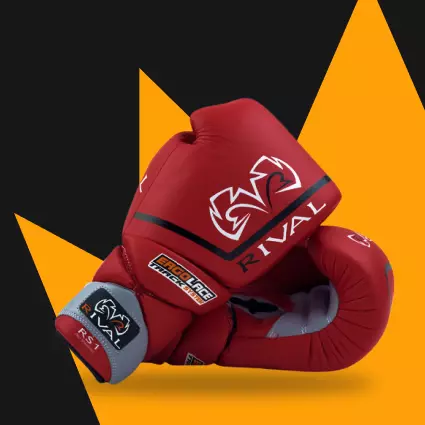
| Rival RS100 Professional Sparring Gloves | Rival | Premium microfiber / PU | Sparring / intense training | Enhanced durability, solid support |
The key is not to divide gloves simply into “genuine” and “synthetic.” The difference between cheap vinyl and modern high-tech microfiber is fundamental.
If you train 1–2 times per week, quality mid-range synthetic material is enough. If you spar regularly and do heavy bag work 4–5 times per week, it’s better to choose either genuine leather or a premium synthetic model from a proven brand.
Padding and shock absorption
Boxing gloves can use different materials inside to absorb impact. Padding determines how softly the glove “returns,” how much your partner feels the blows, and how long the pair lasts under regular training.
Most commonly used fillers include:
- foam polyurethane;
- multi-layer foam of different densities;
- foam-gel inserts.
Less often, natural materials are used — such as horsehair in traditional models.
Multi-layer foam distributes impact across the glove more evenly, while gel inserts add localized protection for the knuckles during hard combinations. The higher the padding quality, the longer the cushioning remains effective. It’s important that it doesn’t “pack down” and lose shape after only a few months of heavy training. If after punches it feels like there’s no padding left, it’s a sign the cushioning is no longer working and the gloves should be replaced.
Stitching and build quality
A quality glove has even, strong stitching with no loose threads and no rough internal seams. In high-stress areas, manufacturers often use double or triple stitching. If the seams look weak, tears will appear fastest along the lines where panels are joined.
Closure system — Velcro or laces?
The wrist support system affects convenience and stability. A poorly chosen strap or lacing can negate even very high-quality boxing gloves.
Velcro — convenience for training
Velcro gloves are easy to put on and take off by yourself. This is convenient in the gym when you need to switch quickly between mitt work, wraps, and other equipment. Velcro provides enough wrist support for most amateur and professional training sessions.
Laces — support for competition
Classic lace-up gloves hug the wrist and hand more tightly and allow a more precise fit adjustment. They are often used in competitions and serious sparring. The downside is that the fighter can’t lace them up alone — you’ll always need a partner or a cornerman.
Which option is better for a beginner?
Beginners are most often advised to choose Velcro gloves. They’re practical, don’t require a coach’s help, and make it easy to switch equipment between drills. Lace-up gloves make more sense once you’re sparring regularly and preparing for bouts.
Common mistakes when choosing gloves
Even high-quality boxing gloves won’t prevent injuries if you choose them poorly. Many mistakes are typical for beginners and are easy to avoid if you know what to look for. The most common issues include:
- choosing only based on price, without considering materials and padding quality;
- picking the wrong ounce weight — too light for sparring or too heavy for technical work;
- buying without trying them on, ignoring hand circumference and wraps;
- underestimating wrist support when the strap stabilizes only part of the wrist/hand;
- using one pair for both bag work and sparring, which quickly “kills” the cushioning.
Avoiding these mistakes significantly improves comfort and training safety — whether it’s your first sessions or preparation for serious fights.
How to make the right choice
For a systematic approach, it’s useful to keep a short checklist of the main criteria at hand.
Quick checklist:
- Decide what you need the gloves for: bag work, sparring, training, or competition.
- Choose the right glove type: bag gloves, sparring gloves, training gloves, or competition gloves.
- Select the weight based on your body weight and your training format.
- Measure your hand circumference and check the brand’s size chart.
- Choose the outer material and padding based on training frequency and budget.
- Decide which closure suits you better: Velcro or laces.
- If possible, try the gloves on with wraps and assess comfort when making a fist.
This approach helps you choose not just a good-looking model, but real protection that lets you progress in boxing without unnecessary injuries.
Visit the MMA Style catalog, choose your gloves online, and if you need advice — we’ll help you pick the best option.